When you are ready to give up, don't!
December 10, 2025
by an investor from Wesleyan University in Dedham, MA, USA
 Author's Note: As part of the course I am teaching next summer at Wesleyan University, "Introduction to Business, Finance & Life," our students will receive two remote sessions and one full-day training session with Pacific Lake on how to be a maximally effective search fund intern. In addition, all these students will be supervised by me. The course itself consists of 10 weeks over the summer, combining 20 hours a week working as an intern for a search fund and 20 hours of classwork. I will be coming back here and throughout the ecosystem to ask for help placing these students in their internships (for which they will be paid by the school, but are free to the searcher). But for now, I wanted to introduce you all to them.
***
Sometimes it’s impossible to know where a thing comes from, other than it’s organic, like from the dirt, growing from seed to seedling towards the rising sun.
I do know that like great art my best ideas have nothing to do with me.
I also know if you are cynical and hopeless spend time with young people. They are full of life and hope and beauty.
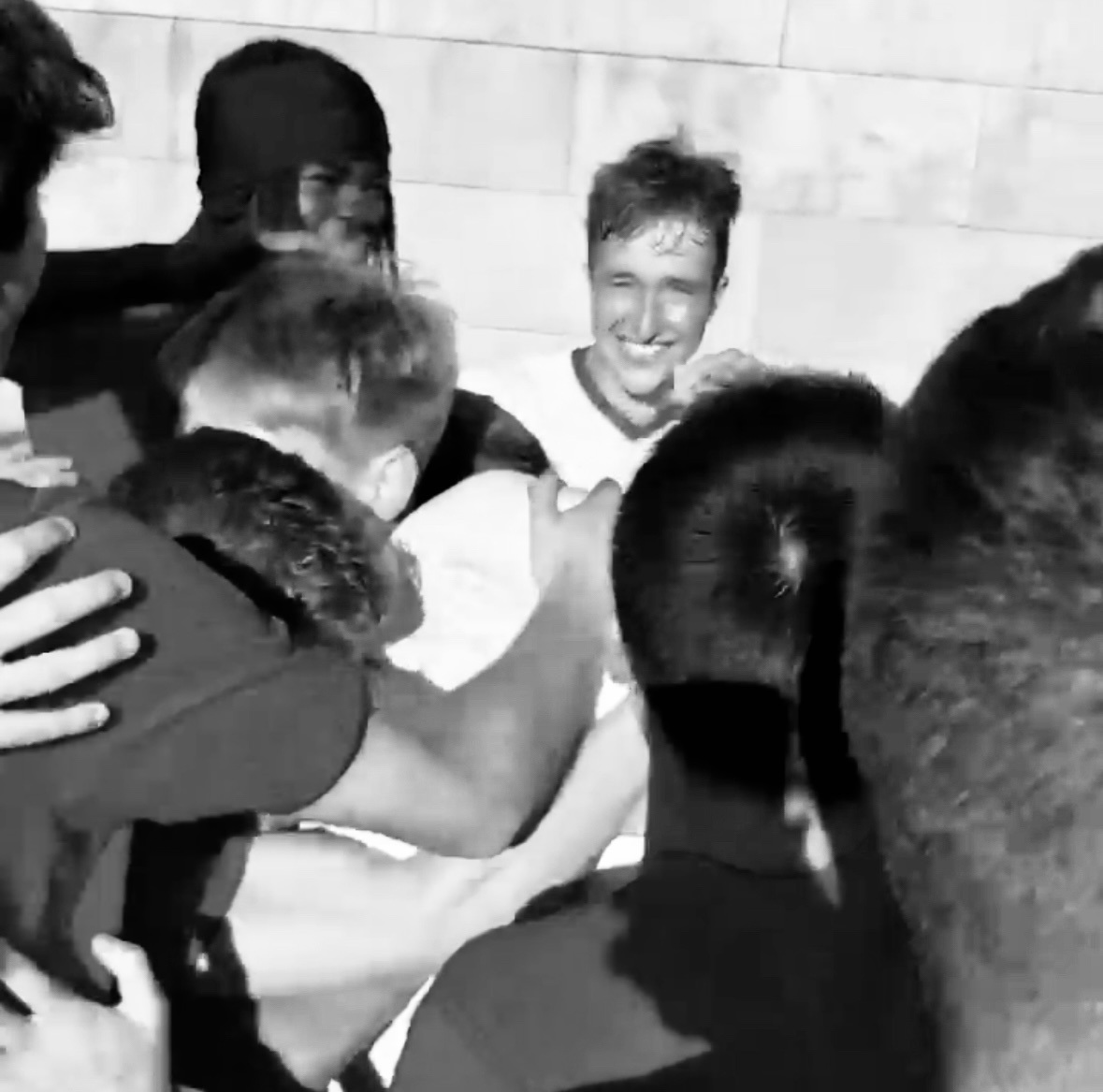
I had this crazy idea for a course on business, finance, and life, originally for my college-aged son, which eventually took root last summer with 14 courageous student-athletes at Wesleyan University. They built a foundation that I didn’t see coming. Like a great love that you didn’t really want but couldn’t quit.
The quiet basketball player with dark skin, Italian native tongue, and massive heart. The coach’s kid who told me I could do better, who would score the winning goal, making us all cry. The rower who talked about the same boys’ camp I went to with my brother to learn to swim. The captain learning a new position. The kid who confided about his problems with porn and pot. And even the one who was so smart he never listened and I wanted to crush like a beer can, but still spoke with such eloquence I couldn’t. And the Korean soccer player who was the minute-by-minute glue keeping the primitive plane together as we tried to take flight.
They all filled my heart with joy and made me want to keep going.
We are mid-way through giving birth to the second cohort. It’s not easy. We had more apply than we can possibly take. It’s agonizing to go through the selection process, trying to make it as fair as we can.
But just so you too can get a taste of what is good in this world, I wanted to share some of what this year's applicants wrote about why they want to be part of this voyage into uncharted waters.
They know nothing. And yet they know everything the rest of us have forgotten and need to remember. I would hug each and every one of them physically if I could. So this is my way of doing that.
***
I adhere to the principle: “Be kind to everyone, no matter how they treat you, don’t chase resentment and hatred.”
Writing this article helped me understand that markets are not only shaped by numbers or logic, but by human perception and emotion. Even at fourteen, I knew I never wanted to be the type of person taking part in a heartless process like this.
Unconditional love seems to be the highest standard of care for other humans there is.
I fear failure, which will definitely happen in this program, but my parents, Tom, and countless others keep reminding me that failure is the key to success.
I want to figure out where I fit into this massive, confusing “business world” that everyone loves to talk about but rarely explains to me in any sort of concrete way.
The most important aspect of the program to me is the connections the students make throughout their time in the course, not only with professionals, but with other students too.
The truth is that I want to take this class because it pushes students to grow in ways that most academic environments do not. Public speaking, interviewing, and presenting are skills I have always struggled with.
I can learn from someone who isn’t afraid to make the unpopular opinion heard, and ride the pink bike is someone that I’d hope to learn from.
I want real conversations, real mentors, and guidance from people who’ve actually lived the things I’m interested in.
My manner of thinking works like a filtration system: everything I take in is reframed in a mathematical context, be it a function, scalar, vector, or shape. Math bleeds into every other aspect of my life.
I still have a strong desire to succeed, but what makes my day isn’t a productive work session or an A essay. It’s coming “home” to the warm dorm of my best friends after long hours spent at the library to laugh about our stupide jokes or make the cold walk to late night dining. I’m not close to the mountaintop Tom warned caution of, but I know when I do reach it my heart will not want for more.
I want to learn how to speak the language of business, hold financial conversations with integrity, make trustworthy deals, and understand how the entire system fits together. For me, that’s the point: not to escape the system, but to understand it well enough to build something within it.
I think I’ve realized that there will be no magic answer to the question of what I want to do with my life. I may or may not have a future career in business or finance. What I do know is that I want to better myself as a person and develop skills useful for a good life.
I know where my strengths fall short, but I also know where they lie strong.
I’ve sat through enough zoom panels, lectures from adults, infosessions, etc to know that they leave out everything that is interesting to me: the messiness, the uncertainty, the failing, and the parts where I will have to make decisions with incomplete information where I have no idea if I am right or wrong.
To be curious, to be creative, and to communicate honestly all of that requires courage. To me, courage isn’t the absence of fear; it’s accepting fear, uncertainty, and the possibility of failure, and choosing to move forward anyway.
At the memorial service I was angry: angry at my friends for laughing and blasting music during the parade like it was just another get-together and angry at the people who stood up and made jokes about my father during their speeches. It felt like everyone was treating the ceremony more like a party than a funeral. ... But as the months passed, I began to appreciate the ceremony. I realized that if anyone enjoyed the ceremony, it would've been my father himself.
What made it the hardest thing I’ve ever done wasn’t the physical challenge it was the internal one. I had to swallow my pride, accept failure, work in silence, and build something from nothing.
What I hadn't prepared for was my Grandma’s grief. After 60 years of marriage, she lost her life partner. For the first time, I had to be strong for her instead of her for me. This experience opened my eyes to how much of a difference I can make in my loved one’s lives by just being there for them. Staying strong and helping my grandmother through this grief was easily the hardest thing I have ever done.
On the field I am held accountable every day. Academically, I do not often experience that same level of daily accountability and feedback. I want that kind of environment. I want to put myself in a situation where the standards are high, the expectations are real, and the feedback is tough love that genuinely makes me better.
I don’t have to choose between finance and narrative, or between analysis and emotion.
Learning to Write taught me that my voice is most powerful when I bring my full self to the page.
Self-discovery is not a solitary journey but a shared one, where other people challenge us and inspire us to uncover the depths of each of our identities.
The course has shifted my priorities, steering me away from valuing material outcomes above all else and from imagining my future solely in terms of income or status. Instead, I now place greater importance on the integrity and character with which I live my life and becoming someone whose actions align with a deeper sense of purpose rather than chasing achievements for their own sake.
But whatever is hidden eventually comes to light. When evaluations came, I failed and not just a little. I failed badly. It was the kind of failure that exposes you, strips you of the titles you hide behind, and forces you to confront who you really are. I remember breaking down, crying helplessly, when I finally approached the program overseer and whispered the words, I had avoided my whole life: “I really need help.” It was the first time I allowed myself to be vulnerable, something I had always believed was a sign of weakness.
That moment taught me what courage truly is. It isn’t loud, it’s within, and it’s choosing to move even when you feel like you can’t. The hardest thing I've ever done was become a version of myself that I was proud of.
Now I see it clearly: I was never meant to fight over a small cupcake in the corner, but to bake the biggest pie together with the people I love and trust — maybe even a blueberry one.
I lost constantly. The physical part was manageable; it was the public part that broke me
down. I’d always been the kid who could joke his way through awkward moments, but that didn’t mean anything when someone had me flat on my back, and the whole room saw it. There’s a particular sting in losing in front of people you eat breakfast with or walk to class with, people who know you well enough to notice the flash of panic or frustration on your face. Every time I got thrown, it felt like another piece of the version of myself I’d been performing cracked off. I wasn’t just getting beaten; I was being seen, and not in the way I’d imagined.
The teammates I respected most became great leaders not after they proved
themselves, but because they were willing to be authentic from the start.
The humility and accountability required to be there for others when you’re not feeling like helping or the trust and patience that someone will be there for you when you need it most. There is nothing like that.
I was the loudest, most supportive, and most energetic person in the country. I held onto that energy because I knew that if I let myself focus on everything else, I would completely fall apart.
I knew I would rather jump into what seemed like a never-ending abyss, than live with
myself and sit in a car ride back for the second year in a row knowing I was too scared to jump.
The hardest part of this experience was the 3 days that by yourself you are sent into the wilderness with an area of about two football fields all around you and there is no human contact for three days. This was insanely hard on the mind because you never know how much you miss and need to at least see a person before you go insane.
The hardest thing I have ever done wasn’t a single moment but rather it was choosing, every day, to keep building a life in a place where nothing felt familiar at first.
I enjoy being in rooms where certainty isn’t guaranteed, and where asking good questions is valued more than pretending to already know the answer.
What excites me most is the program’s emphasis on mentorship and honesty. It’s rare to find a space where people are willing to talk about meaning and identity with the same seriousness as finance and deals.
This taught me that leadership is not simply authority; it is responsibility. It is earning trust during difficult times and making decisions when information is incomplete. I learned how to lead in ambiguity and how to build systems, not just follow them.
I approach this program with both ambition and humility. I'm ambitious about my future. I know I want to create, build, and lead, but I'm humble enough to recognize how much I need to learn to get there.
I believe a good mentor does not ask a younger student to do something they won’t/haven’t done. Actions speak louder than words, and I let my actions do the talking to cultivate mutual respect. If I am expecting a younger student to finish a book by a deadline or bring energy and enthusiasm to class, I had better be willing to do the same.
I've continued seeking out role models, and the common thread among the most influential ones has been their ability to push me out of my comfort zone without positioning me for failure. Too often, people in authority lead from distance or intimidation, which only pressures students to contort themselves to meet unclear expectations.
My approach is to build a direct line of communication and emotional connection so the
person I'm working with knows I'm invested in them. When students feel supported by
teachers, they feel more capable of taking risks, which inevitably raises their bar of success, driving personal growth.
I am not afraid of feedback, in fact I am constantly seeking it out from my coaches, especially the tough love that Tom so often talks about.
Author's Note: As part of the course I am teaching next summer at Wesleyan University, "Introduction to Business, Finance & Life," our students will receive two remote sessions and one full-day training session with Pacific Lake on how to be a maximally effective search fund intern. In addition, all these students will be supervised by me. The course itself consists of 10 weeks over the summer, combining 20 hours a week working as an intern for a search fund and 20 hours of classwork. I will be coming back here and throughout the ecosystem to ask for help placing these students in their internships (for which they will be paid by the school, but are free to the searcher). But for now, I wanted to introduce you all to them.
***
Sometimes it’s impossible to know where a thing comes from, other than it’s organic, like from the dirt, growing from seed to seedling towards the rising sun.
I do know that like great art my best ideas have nothing to do with me.
I also know if you are cynical and hopeless spend time with young people. They are full of life and hope and beauty.
I had this crazy idea for a course on business, finance, and life, originally for my college-aged son, which eventually took root last summer with 14 courageous student-athletes at Wesleyan University. They built a foundation that I didn’t see coming. Like a great love that you didn’t really want but couldn’t quit.
The quiet basketball player with dark skin, Italian native tongue, and massive heart. The coach’s kid who told me I could do better, who would score the winning goal, making us all cry. The rower who talked about the same boys’ camp I went to with my brother to learn to swim. The captain learning a new position. The kid who confided about his problems with porn and pot. And even the one who was so smart he never listened and I wanted to crush like a beer can, but still spoke with such eloquence I couldn’t. And the Korean soccer player who was the minute-by-minute glue keeping the primitive plane together as we tried to take flight.
They all filled my heart with joy and made me want to keep going.
We are mid-way through giving birth to the second cohort. It’s not easy. We had more apply than we can possibly take. It’s agonizing to go through the selection process, trying to make it as fair as we can.
But just so you too can get a taste of what is good in this world, I wanted to share some of what this year's applicants wrote about why they want to be part of this voyage into uncharted waters.
They know nothing. And yet they know everything the rest of us have forgotten and need to remember. I would hug each and every one of them physically if I could. So this is my way of doing that.
***
I adhere to the principle: “Be kind to everyone, no matter how they treat you, don’t chase resentment and hatred.”
Writing this article helped me understand that markets are not only shaped by numbers or logic, but by human perception and emotion. Even at fourteen, I knew I never wanted to be the type of person taking part in a heartless process like this.
Unconditional love seems to be the highest standard of care for other humans there is.
I fear failure, which will definitely happen in this program, but my parents, Tom, and countless others keep reminding me that failure is the key to success.
I want to figure out where I fit into this massive, confusing “business world” that everyone loves to talk about but rarely explains to me in any sort of concrete way.
The most important aspect of the program to me is the connections the students make throughout their time in the course, not only with professionals, but with other students too.
The truth is that I want to take this class because it pushes students to grow in ways that most academic environments do not. Public speaking, interviewing, and presenting are skills I have always struggled with.
I can learn from someone who isn’t afraid to make the unpopular opinion heard, and ride the pink bike is someone that I’d hope to learn from.
I want real conversations, real mentors, and guidance from people who’ve actually lived the things I’m interested in.
My manner of thinking works like a filtration system: everything I take in is reframed in a mathematical context, be it a function, scalar, vector, or shape. Math bleeds into every other aspect of my life.
I still have a strong desire to succeed, but what makes my day isn’t a productive work session or an A essay. It’s coming “home” to the warm dorm of my best friends after long hours spent at the library to laugh about our stupide jokes or make the cold walk to late night dining. I’m not close to the mountaintop Tom warned caution of, but I know when I do reach it my heart will not want for more.
I want to learn how to speak the language of business, hold financial conversations with integrity, make trustworthy deals, and understand how the entire system fits together. For me, that’s the point: not to escape the system, but to understand it well enough to build something within it.
I think I’ve realized that there will be no magic answer to the question of what I want to do with my life. I may or may not have a future career in business or finance. What I do know is that I want to better myself as a person and develop skills useful for a good life.
I know where my strengths fall short, but I also know where they lie strong.
I’ve sat through enough zoom panels, lectures from adults, infosessions, etc to know that they leave out everything that is interesting to me: the messiness, the uncertainty, the failing, and the parts where I will have to make decisions with incomplete information where I have no idea if I am right or wrong.
To be curious, to be creative, and to communicate honestly all of that requires courage. To me, courage isn’t the absence of fear; it’s accepting fear, uncertainty, and the possibility of failure, and choosing to move forward anyway.
At the memorial service I was angry: angry at my friends for laughing and blasting music during the parade like it was just another get-together and angry at the people who stood up and made jokes about my father during their speeches. It felt like everyone was treating the ceremony more like a party than a funeral. ... But as the months passed, I began to appreciate the ceremony. I realized that if anyone enjoyed the ceremony, it would've been my father himself.
What made it the hardest thing I’ve ever done wasn’t the physical challenge it was the internal one. I had to swallow my pride, accept failure, work in silence, and build something from nothing.
What I hadn't prepared for was my Grandma’s grief. After 60 years of marriage, she lost her life partner. For the first time, I had to be strong for her instead of her for me. This experience opened my eyes to how much of a difference I can make in my loved one’s lives by just being there for them. Staying strong and helping my grandmother through this grief was easily the hardest thing I have ever done.
On the field I am held accountable every day. Academically, I do not often experience that same level of daily accountability and feedback. I want that kind of environment. I want to put myself in a situation where the standards are high, the expectations are real, and the feedback is tough love that genuinely makes me better.
I don’t have to choose between finance and narrative, or between analysis and emotion.
Learning to Write taught me that my voice is most powerful when I bring my full self to the page.
Self-discovery is not a solitary journey but a shared one, where other people challenge us and inspire us to uncover the depths of each of our identities.
The course has shifted my priorities, steering me away from valuing material outcomes above all else and from imagining my future solely in terms of income or status. Instead, I now place greater importance on the integrity and character with which I live my life and becoming someone whose actions align with a deeper sense of purpose rather than chasing achievements for their own sake.
But whatever is hidden eventually comes to light. When evaluations came, I failed and not just a little. I failed badly. It was the kind of failure that exposes you, strips you of the titles you hide behind, and forces you to confront who you really are. I remember breaking down, crying helplessly, when I finally approached the program overseer and whispered the words, I had avoided my whole life: “I really need help.” It was the first time I allowed myself to be vulnerable, something I had always believed was a sign of weakness.
That moment taught me what courage truly is. It isn’t loud, it’s within, and it’s choosing to move even when you feel like you can’t. The hardest thing I've ever done was become a version of myself that I was proud of.
Now I see it clearly: I was never meant to fight over a small cupcake in the corner, but to bake the biggest pie together with the people I love and trust — maybe even a blueberry one.
I lost constantly. The physical part was manageable; it was the public part that broke me
down. I’d always been the kid who could joke his way through awkward moments, but that didn’t mean anything when someone had me flat on my back, and the whole room saw it. There’s a particular sting in losing in front of people you eat breakfast with or walk to class with, people who know you well enough to notice the flash of panic or frustration on your face. Every time I got thrown, it felt like another piece of the version of myself I’d been performing cracked off. I wasn’t just getting beaten; I was being seen, and not in the way I’d imagined.
The teammates I respected most became great leaders not after they proved
themselves, but because they were willing to be authentic from the start.
The humility and accountability required to be there for others when you’re not feeling like helping or the trust and patience that someone will be there for you when you need it most. There is nothing like that.
I was the loudest, most supportive, and most energetic person in the country. I held onto that energy because I knew that if I let myself focus on everything else, I would completely fall apart.
I knew I would rather jump into what seemed like a never-ending abyss, than live with
myself and sit in a car ride back for the second year in a row knowing I was too scared to jump.
The hardest part of this experience was the 3 days that by yourself you are sent into the wilderness with an area of about two football fields all around you and there is no human contact for three days. This was insanely hard on the mind because you never know how much you miss and need to at least see a person before you go insane.
The hardest thing I have ever done wasn’t a single moment but rather it was choosing, every day, to keep building a life in a place where nothing felt familiar at first.
I enjoy being in rooms where certainty isn’t guaranteed, and where asking good questions is valued more than pretending to already know the answer.
What excites me most is the program’s emphasis on mentorship and honesty. It’s rare to find a space where people are willing to talk about meaning and identity with the same seriousness as finance and deals.
This taught me that leadership is not simply authority; it is responsibility. It is earning trust during difficult times and making decisions when information is incomplete. I learned how to lead in ambiguity and how to build systems, not just follow them.
I approach this program with both ambition and humility. I'm ambitious about my future. I know I want to create, build, and lead, but I'm humble enough to recognize how much I need to learn to get there.
I believe a good mentor does not ask a younger student to do something they won’t/haven’t done. Actions speak louder than words, and I let my actions do the talking to cultivate mutual respect. If I am expecting a younger student to finish a book by a deadline or bring energy and enthusiasm to class, I had better be willing to do the same.
I've continued seeking out role models, and the common thread among the most influential ones has been their ability to push me out of my comfort zone without positioning me for failure. Too often, people in authority lead from distance or intimidation, which only pressures students to contort themselves to meet unclear expectations.
My approach is to build a direct line of communication and emotional connection so the
person I'm working with knows I'm invested in them. When students feel supported by
teachers, they feel more capable of taking risks, which inevitably raises their bar of success, driving personal growth.
I am not afraid of feedback, in fact I am constantly seeking it out from my coaches, especially the tough love that Tom so often talks about.